Why Does A 600W Power Inverter Need A Cooling Fan For Continuous Operation?
Taurus, known for its innovation in energy conversion systems, has recently drawn attention to a practical engineering question surrounding the 600W Power Inverter and its thermal management during continuous operation. In real-world applications where energy stability and reliability are critical, one small component—the cooling fan—often determines whether the system performs smoothly or faces early efficiency decline. This topic has become increasingly relevant as portable energy systems and renewable setups expand into daily residential and field use.
The discussion is not limited to technical circles. From backup home energy systems to outdoor field equipment and mobile power setups, users are beginning to notice that heat management is not just a design detail but a core factor affecting operational consistency. Understanding why cooling is essential helps explain how compact power conversion devices maintain performance under sustained load.
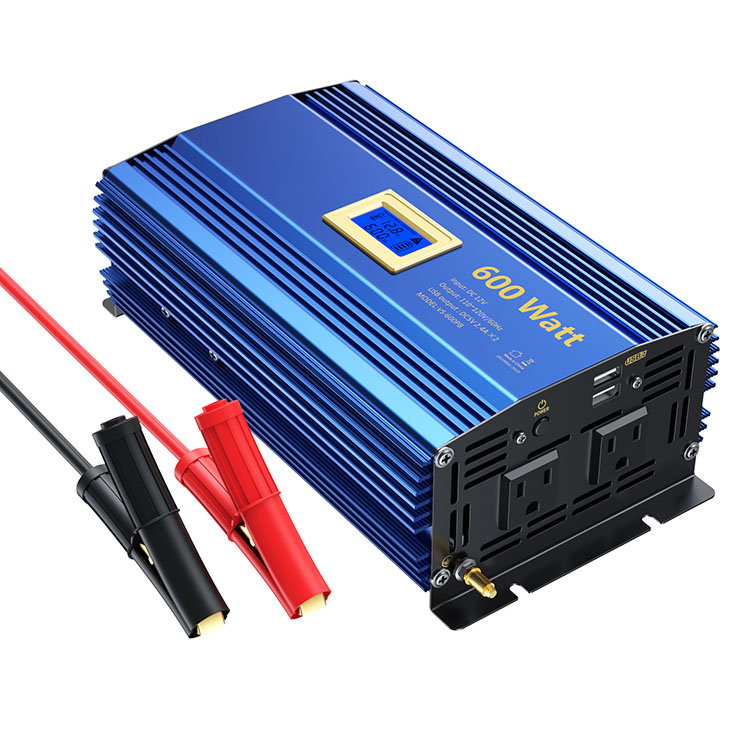
The Role of Thermal Control in the Power Inverter
A 600W Power Inverter operates by converting direct current (DC) into alternating current (AC). During this conversion, energy loss naturally occurs in the form of heat. Even with modern high-efficiency circuit design, no inverter is completely free from thermal buildup.
When operating continuously, internal components such as transformers, MOSFETs, and capacitors gradually accumulate heat. If this heat is not managed, it can lead to reduced conversion efficiency, unstable output voltage, or automatic shutdown triggered by built-in protection systems.
This is where the cooling fan becomes essential. Instead of allowing heat to build up passively, active airflow ensures temperature balance inside the casing. The presence of forced air circulation stabilizes the inverter's internal environment, especially when it is powering multiple devices simultaneously or operating in warm ambient conditions.
Why Heat Accumulates During Continuous Operation
Heat generation in inverters is not random—it follows predictable electrical principles. When DC electricity is switched into AC, switching losses occur in semiconductor devices. Additionally, magnetic components generate core losses under load.
In continuous operation scenarios, three main factors contribute to heat accumulation:
1. Conversion Losses
No conversion process is 100% efficient. Even a well-optimized Power Inverter will release a portion of input energy as heat.
2. Load Stress
Higher connected loads increase current flow, which directly raises component temperature.
3. Ambient Temperature
External environmental heat adds to internal thermal buildup, particularly in enclosed or poorly ventilated spaces.
These factors combined explain why passive cooling alone is often insufficient for stable long-duration use.
Cooling Fan vs Passive Cooling: Practical Differences
Cooling methods in inverter systems generally fall into two categories: passive dissipation and active forced air cooling. Each has distinct characteristics.
| Cooling Method | Temperature Control | Efficiency Stability | Noise Level | Suitable Usage Scenario |
| Passive Cooling | Moderate | May fluctuate under load | Silent | Low-power intermittent use |
| Fan-Based Cooling | Strong | Stable under continuous load | Low to moderate | Continuous or high-load operation |
A Power Inverter equipped with a cooling fan can maintain a more consistent internal temperature profile, especially during extended usage cycles. Passive systems rely heavily on surface area and ambient airflow, which can become insufficient when devices are placed in confined environments such as vehicle cabins or storage compartments.
Engineering Perspective: Why Fans Improve Stability
From an engineering standpoint, the cooling fan is not simply an accessory but part of the inverter's protection architecture. It works in coordination with internal temperature sensors and control circuits.
When internal temperature reaches a predefined threshold, the fan activates automatically. This dynamic response ensures that heat is removed only when necessary, balancing energy consumption and cooling performance.
More importantly, stable thermal conditions protect semiconductor switching behavior. In power electronics, even slight temperature variation can influence resistance and switching speed, which affects output waveform quality. By maintaining a controlled thermal environment, the inverter preserves cleaner AC output and reduces harmonic distortion under load.
Real-World Application Scenarios
The use of a 600W Power Inverter extends across multiple environments, each presenting unique thermal challenges:
- Home backup systems: Extended runtime during power interruptions requires continuous operation without overheating risk.
- Outdoor field equipment: Limited airflow in portable setups increases dependency on active cooling.
- Vehicle-based systems: Enclosed cabins can trap heat quickly, especially in summer conditions.
- Remote renewable setups: Solar energy systems often operate in high-temperature environments with prolonged load cycles.
In each of these cases, the cooling fan ensures that energy conversion remains stable even when environmental conditions are less than ideal.
Material and Design Factors Supporting Cooling Efficiency
Modern inverter design integrates thermal management at multiple levels. Heat sinks made from aluminum alloys are commonly used to increase surface area for heat dissipation. However, material design alone is not sufficient.
Airflow direction, fan speed regulation, and internal component layout all contribute to cooling efficiency. In well-optimized systems, airflow is directed across the highest heat-generating components first, ensuring targeted thermal relief.
Additionally, protective certifications such as UL, CE, and RoHS often require compliance with thermal safety standards, reinforcing the importance of reliable cooling systems in electrical devices operating under continuous load conditions.
Table: Key Factors Influencing Inverter Temperature Performance
| Factor | Impact on Heat Generation | Cooling Dependency |
| Output Load Level | High | High |
| Ambient Temperature | Medium to High | High |
| Component Efficiency | Medium | Medium |
| Enclosure Ventilation | Medium | High |
| Operating Duration | High | Very High |
This breakdown shows that continuous operation is the most significant driver of thermal stress, reinforcing why active cooling becomes essential in practical usage.
Safety and Longevity Considerations
Thermal stability is closely linked to long-term operational reliability. Excessive heat can accelerate component aging, particularly in electrolytic capacitors and power switching devices. Over time, this may result in reduced efficiency or intermittent performance issues.
A cooling fan helps slow this degradation process by maintaining components within their optimal operating temperature range. In addition, many systems integrate automatic shutdown or throttling mechanisms that work in tandem with cooling systems to prevent thermal runaway conditions.
For a 600W Power Inverter, this balance between power output and temperature control is essential for maintaining consistent performance across different usage environments.
Industry Observation: Growing Importance of Compact Thermal Systems
As energy storage and portable power applications continue to expand, compact inverter designs face increasing thermal density challenges. Smaller enclosures mean less natural heat dispersion, making active cooling more relevant than ever.
This trend is particularly visible in integrated energy systems where photovoltaic input, battery storage, and AC output coexist in a single unit. In such configurations, thermal coordination becomes a system-wide requirement rather than a single-component function.
Companies like Ningbo Taurus Industry Co., Ltd. have contributed to this evolution by integrating multi-layer protection systems, intelligent temperature monitoring, and optimized airflow designs across their inverter product lines, including the Power Inverter series.
Conclusion
Continuous operation of compact power conversion systems depends heavily on effective thermal management. The cooling fan is not simply an added feature but a functional necessity that supports stable energy conversion, protects internal components, and ensures consistent output quality under varying environmental conditions. As demand for portable and renewable energy systems grows, the role of intelligent cooling design becomes even more significant in maintaining reliability across diverse applications.
Within this context, the engineering approach adopted in the 600W Power Inverter by Ningbo Taurus Industry Co., Ltd. reflects the broader industry shift toward integrated thermal control and durable energy solutions aligned with modern usage demands.